
ABOUT
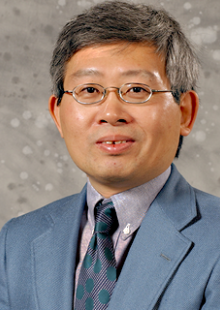
Dr. Youjiang Wang joined Georgia Tech faculty in 1989. His research interests include mechanics of composites, yarns, fabrics, and geotextiles; manufacturing processes and characterization of fibers, textiles and textile structural composites; and fiber recycling.
Dr. Wang is a registered Professional Engineer in the State of Georgia, and a Fellow of ASME.
Teaching Interests
Professor Wang’s teaching focuses on core materials science and engineering topics at both undergraduate and graduate levels. His instruction emphasizes materials characterization, structure-property relationships, and advanced microscopy techniques. Professor Wang integrates fundamental principles with practical applications to provide students a comprehensive understanding of materials’ behavior and analysis. He actively involves students in learning processes to develop their analytical and experimental skills in materials science and engineering. (67 words)
PUBLICATIONS & PATENTS
Lingling Meng, Youjiang Wang, Qufu Wei, Xinmin Huang, Jiayu Shen & Hongwei Chen (2021) Study on the structure and properties of Ag/Cu nanocomposite film deposited on the surface of polyester substrates, The Journal of The Textile Institute, 112:10, 1671-1677, DOI: 10.1080/00405000.2020.1838129.
Honglin Liu, Karl I. Jacob, and Youjiang Wang, “Scaling in Membrane Distillation (MD): Current State of Art Insight on Mechanisms and Membrane Design”, Desalination, Vol 581 (20), 117539,https://doi.org/10.1016/j.desal.2024.117539 (2024).
Vibhor Jain, Xin Li, Karl I. Jacob and Youjiang Wang, “Effect of Strain Rate and Temperature on the Crystallization Behavior of Amorphous Poly(Ethylene Terephthalate) Fibers During Superdrawing”, The Journal of The Textile Institute, Vol 116 (4), 560–574, https://doi.org/10.1080/00405000.2024.2346667 (2025).
Honglin Liu, Zifeng Wang, Xuzheng Tian, Karl I. Jacob, Youjiang Wang, Unveiling the water molecule diffusion in graphene aerogels: A molecular dynamics study with statistical analysis for advancing membrane distillation, Journal of Molecular Liquids Volume 433, 1 September 2025, 127891 https://doi.org/10.1016/j.molliq.2025.127891 (2025).
Honglin Liu, Zifeng Wang, Xuzheng Tian, Karl I. Jacob, Youjiang Wang, Molecular Investigation of Thermal Conduction and Local Phonon Transport in Graphene Aerogels, International Journal of Heat and Mass Transfer, https://doi.org/10.1016/j.ijheatmasstransfer.2025.127713 (2025)
Bandu Madhukar Kale, Jakub Wienera, Jiri Militkya, Samson Rwawiirea,Rajesh Mishraa, Karl I. Jacob, Youjiang Wang, “Coating of cellulose-TiO2 nanoparticles on cotton fabric for durablephotocatalytic self-cleaning and stiffness”, Carbohydrate Polymers, Vol. 150 (2016) 107–113.
Tieshi He, Qunyan Su, Zehra Yildiz, Kedi Cai, Youjiang Wang, “Ultrafine Carbon Fibers with Hollow-Porous Multilayered Structure for Supercapacitors,” Electrochimica Acta, Vol. 222 (2016) 1120-1127.
Haiyan Mao, Youjiang Wang, Donggang Yao, Chaoxia Wang, Shiguo Sun, “Synthesis of Blocked Waterborne Polyurethane Polymeric Dyes with Tailored Molecular Weight: Thermal, Rheological and Printing Properties”, RSC Advances, Vol. 6 (2016) 56831–56838.
Dildar Ali Lakho, Donggang Yao, Kyonghoon Cho, Muhammad Ishaq, andYoujiang Wang, Study of the Curing Kinetics towards Development of Fast Curing Epoxy Resins, Polym. Plast. Technol. Eng. Vol. 56 No. 2 (2017) 161-170.
Zehra Yildiz, H. Ayşen Önen, Atilla Güngör, Youjiang Wang, Karl Jacob, “Synthesis and application of dual-curable PVB based adhesive formulations for cord/rubber applications,” Journal of Adhesion Science and Technology, Vol. 31 No. 17 (2017) 1900-1911.
EDUCATION & AWARDS
- Ph.D., 1989, Mechanical Engineering, Massachusetts Institute of Technology
- S.M., 1985, Mechanical Engineering, Massachusetts Institute of Technology
- B.S., 1982, Textile Engineering, Donghua University
RESEARCH INTERESTS
Professor Wang’s research centers on the development and application of advanced electron microscopy methods to characterize the structure and properties of functional materials. His work explores nanoscale phenomena in oxides, semiconductors, and energy materials to understand and improve their performance. This research aims to elucidate atomic-scale mechanisms that govern materials behavior, combining experimental imaging, spectroscopy, and analytical techniques to advance materials design and innovation. (67 words)